Peonies and a Poet
Sunset Healing: Friday Story

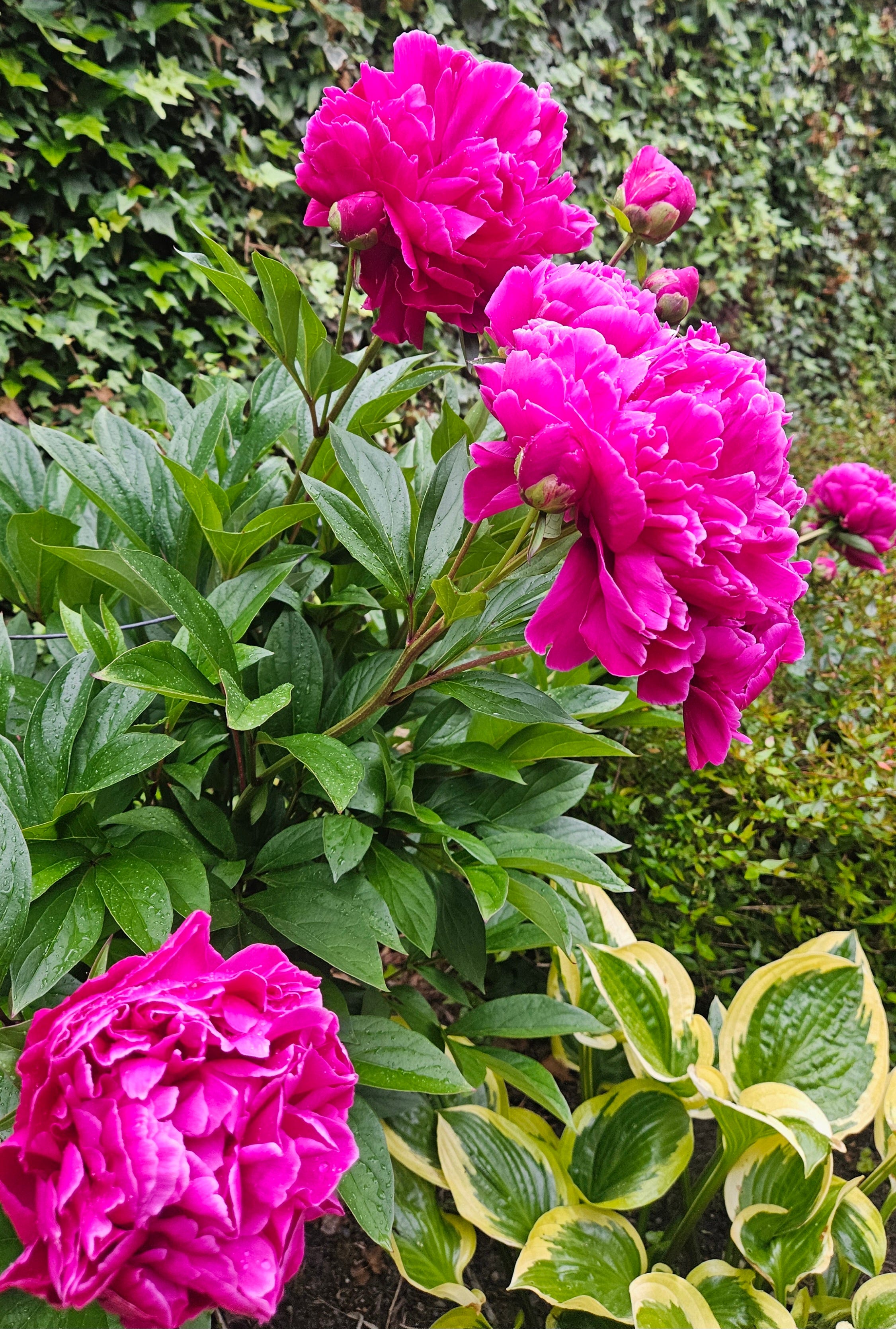
As peonies begin to bloom in late May and reach their full glory in June, the buds in my own garden finally open as well.
Whenever they do, I find myself whispering,
“Oh, Madeline. You’ve come back to visit my heart once again.”
She was the kindly elderly woman who lived next door in Seattle when I first arrived in a new and unfamiliar land.
We spent hours pulling weeds, tending our gardens, and talking about ordinary things. If she misplaced her pruning shears and spent twenty minutes looking for them, I would find them in seconds. She would beam with delight as if I had performed a miracle. That is how our friendship began.
I remember the photograph of Marilyn Monroe hanging on her refrigerator, the vegetable beds in her backyard, and the rows of raspberries she carefully tended. Only later did I realize that all of these things found their way into her poetry.
One day, she asked if I liked poetry.
I told her that I loved the work of Sister Haein Lee, a beloved Korean poet and nun, especially her collection The Territory of Dandelions. I also told her how much I enjoyed seeing dandelions growing freely across America. Then I admitted that I, too, loved writing poems.
Even then, Madeline never spoke much about her accomplishments.
One June afternoon, while tending the same deep pink peonies that bloom in my garden today, she asked,
“Julia, do you like peonies?”
In Korea, peonies were not flowers I often saw growing naturally, so I told her I didn’t know much about them. But I did know that hers were beautiful.
As the months passed, our friendship deepened.
We would become so absorbed in conversation that we lost track of time. One afternoon, while chatting and laughing together, I completely forgot about the rice cooking on my stove.
Suddenly Madeline pointed toward my house and shouted,
“Julia! Your house is on fire! Look at that smoke!”
To this day, the memory still makes me laugh.
There were thirty-five years between us.
Different generations, different cultures, and different life experiences.
Yet somehow, in a small Seattle neighborhood, we became friends.
The older I grow, the more grateful I am for that unexpected gift.
Through many quiet conversations, I eventually learned that my neighbor, Madeline DeFrees, was a respected poet admired by many.
For a graduate school assignment, I interviewed her and recorded our conversation.
During that interview, she told me that she had not begun writing seriously until she was forty years old.
Then she offered me a piece of advice that has stayed with me ever since:
“Don’t stop writing. It's never been late.”
She even gave me a copy of her first essay collection, saying that I was welcome to translate it into Korean if I ever wished. I still treasure that photocopy today.
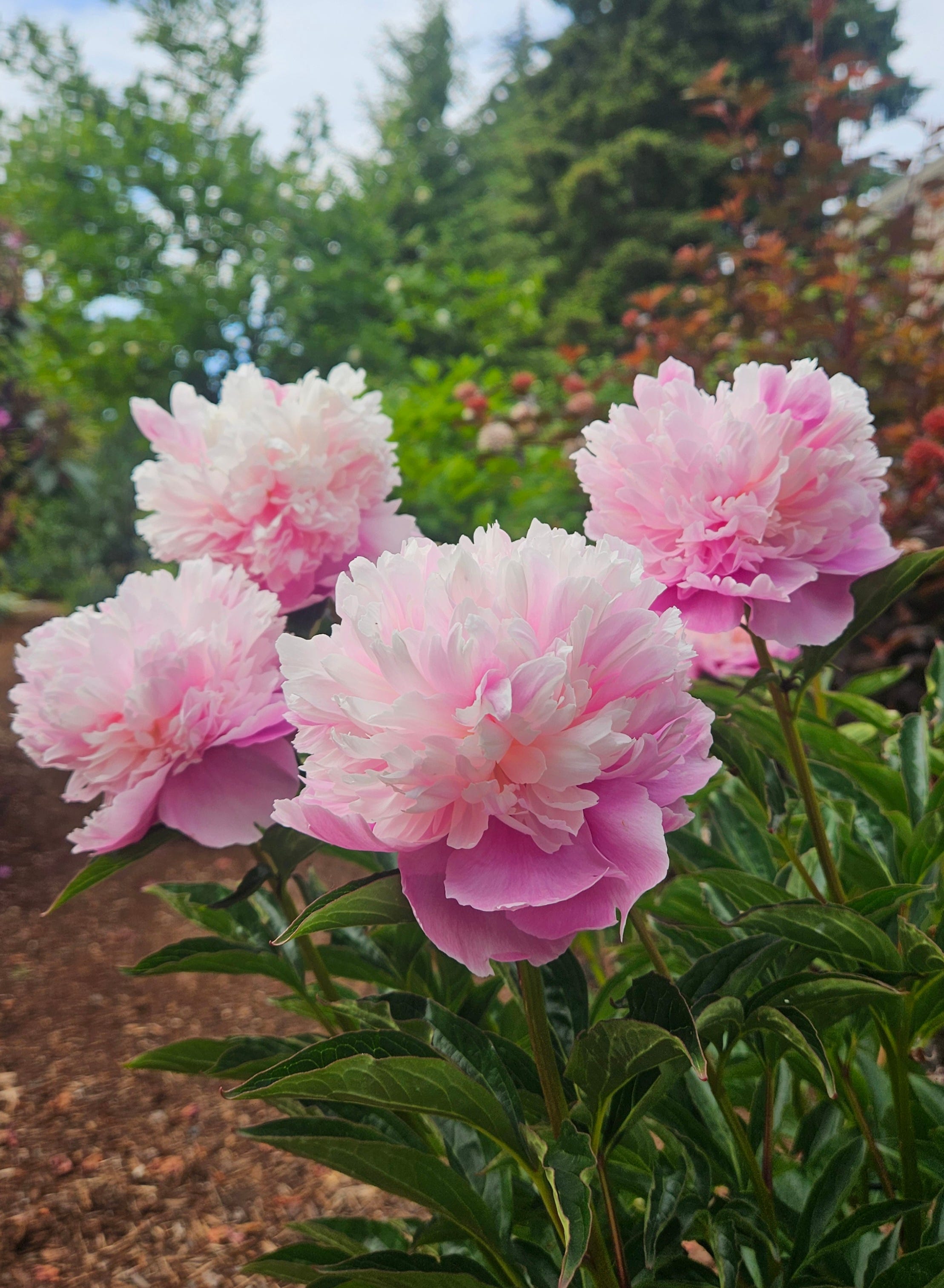
Over the years, those deep rose-colored peonies became symbols of friendship, encouragement, and love.
Even after Madeline was gone, they continued to return each year.
When the petals begin to fall, I quietly whisper,
“See you again next year.”
And somehow, I no longer see only the flowers.
I see her face.
Sometimes I hold the small keepsakes she left behind. Sometimes I open one of her poetry collections and revisit the creative conversations we once shared.
And each year, as the peonies bloom, I realize that the image of Madeline has become inseparable from the flowers themselves.
Within the spectrum of my own life, the memory of Madeline DeFrees and the beauty of peonies have quietly merged into one.
모란과 시인
5월 말부터 피기 시작한 모란은 6월이 되면 절정에 이릅니다. 우리 집 정원에서도 꽃봉오리가 하나둘 터지기 시작하면 저는 속으로 이렇게 인사합니다.
“오, 매들린. 또 이렇게 제 마음속에 찾아오시는군요.”
낯선 나라에서 만난 정겨운 옆집 할머니.
우리는 함께 풀을 뽑고 정원을 가꾸며 시간을 보냈습니다. 정원 가위를 찾지 못해 한참을 두리번거리던 그녀에게 제가 몇 초 만에 가위를 찾아주면, 매들린은 세상을 다 얻은 듯 환하게 웃었습니다. 그렇게 우리는 조금씩 우정을 쌓아갔습니다.
냉장고 위에 붙어 있던 마릴린 먼로 사진, 뒷마당의 채소밭과 라즈베리 정원. 나중에야 저는 그 모든 것이 그녀의 시가 태어나는 공간이라는 사실을 알게 되었습니다.
어느 날 매들린은 제게 시를 좋아하느냐고 물었습니다.
저는 한국의 수녀 시인 이해인님의 《민들레의 영토》를 좋아한다고 말했습니다. 미국에서는 민들레가 어디에나 피어 있어 더 반갑다고도 했습니다. 그리고 저 역시 시 쓰기를 좋아한다고 이야기했습니다.
그런데도 그녀는 자신이 어떤 사람인지 쉽게 말해주지 않았습니다.
어느 유월의 날, 사진 속에 보이는 진한 분홍빛 모란을 돌보던 그녀가 제게 물었습니다.
“줄리아, 모란을 좋아하니?”
한국에서는 생화 모란을 쉽게 볼 기회가 많지 않았기에 잘 모르겠다고 대답했습니다. 하지만 매들린의 정원에 피어 있던 모란은 참 아름답다고 말했습니다.
우리는 점점 더 가까워졌습니다.
대화에 빠져들어 스토브 위의 밥이 타는 줄도 모르고 깔깔 웃으며 이야기를 나누던 어느 날, 매들린이 갑자기 외쳤습니다.
“줄리아! 너희 집에 불났다! 저 연기 좀 봐!”
지금 생각하면 웃음이 나는 추억입니다.우리 사이에는 서른다섯 해의 나이 차이가 있었습니다.
언어도 달랐고, 자라온 문화도 달랐고, 살아온 세월도 달랐습니다.
그런데 이상하게도 우리는 친구가 되었습니다.
지금 돌아보면 그것은 제 삶이 받은 뜻밖의 선물 중 하나였습니다.
둘만 알던 소곤소곤한 이야기들 속에서 저는 어느 날 그녀가 많은 사람들에게 존경받는 시인이라는 사실을 알게 되었습니다. 대학원 수업 과제로 인터뷰를 하며 그녀의 이야기를 녹음하기도 했습니다.
매들린은 마흔 살이 되어서야 글쓰기를 시작했다고 했습니다. 그리고 제게 말했습니다. “늦는다는건 없어! 글쓰기를 멈추지 마.”
원한다면 자신의 첫 에세이집을 한국어로번역해도 좋다며 책 한 권을 건네주어 카피를 해두기도 했습니다.
그렇게 진한 블랙핑크 모란은 제게 사랑으로, 격려로, 우정으로 남았습니다.
매들린이 세상을 떠난 후에도 그 모란은 해마다 찾아옵니다.
꽃잎이 하나둘 떨어질 때면 저는 속삭입니다.
“내년에 또 만나요.”
이제는 모란보다 그녀의 얼굴이 먼저 떠오릅니다.
그녀가 남기고 간 작은 소품들을 만져보기도 하고, 함께 나누었던 창작의 시간들을 떠올리며 시집을 펼쳐봅니다.
그리고 문득 깨닫습니다.
내 삶의 스펙트럼 속에 비친 매들린의 모습이, 어느새 모란과 겹쳐져 있다는 것을요.
Author's Note:
Madeline DeFrees (1919–2015) was an award-winning American poet, educator, and Catholic nun whose work explored memory, faith, nature, and the human spirit.
Readers interested in learning more about her life and work may visit:
https://www.poetryfoundation.org/poets/madeline-defrees?utm_source=chatgpt.com
So beautiful and good .